LGWP26 Case Study: Turning 270 Submissions into a Traceable Evidence Base
LGWP26 Case Study: Turning 270 Submissions into a Traceable Evidence Base
LGWP26 Case Study: Turning 270 Submissions into a Traceable Evidence Base
Table of Contents
Table of Contents
Get Free Templates & Resources
Turning messy submissions into a traceable evidence base (and a drafting assistant)
Between August 2025 and March 2026, I helped the LGWP26 team turn a high-volume pile of qualitative inputs into something the team could actually use under pressure:
a clean, traceable evidence base
a repeatable specialist review + reporting pipeline
and a searchable evidence assistant to support drafting through to finalisation
This wasn’t “run AI, get a summary.” The value came from the plumbing: structured capture, a consistent taxonomy, review loops, clear audit trails, and outputs you could regenerate as the evidence base evolved.

What we produced (at a glance)
Inputs
270 submissions received
265 included in the cleaned dataset (after dedupe / scope / quality checks)
specialist comments on the synthesis pack
specialist thematic reports (written by domain experts)
Outputs
a clean claims database with a documented taxonomy and traceability back to source text
a 100-page integrated synthesis for specialist review and policy optioning
11 thematic reports (plus cross-cutting synthesis) packaged for review and drafting
a triangulation layer comparing public vs specialist signals (alignments + gaps)
an interactive evidence assistant grounded in the curated corpus to support retrieval and structured drafting support
a handover-ready package: SOPs, data dictionary, QA approach, workflow map

The problem
The White Paper team needed a coherent, defensible view of what people submitted—fast. And then they needed to bring specialist review and thematic expertise into the same picture without losing traceability.
The constraints were familiar policy-grade ones:
submissions arrive as PDFs, emails, scans, letters… all different formats
manual collation is slow, inconsistent, and hard to audit
late-stage “reconciliation” creates rework and dents confidence
specialists don’t want raw folders—they want structured packs and clear prompts
drafters need fast retrieval of evidence without rereading everything

The approach
I used the same building blocks I use in other evidence-heavy policy and donor contexts: capture → structure → review → publish → retrieve.
1) Data capture & workflow controls
Even without a public intake form, the core job was the same: turn messy documents into structured records with clear control points.
What we set up:
repeatable intake from mixed sources
standard file naming + metadata capture + dedupe controls
status tracking across Ingest → Tag → Review → Publish
flags for needs_review, escalate_to_reference_group, confidential_redaction, out_of_scope
Result: the evidence base became consistent, trackable, and owned—no more “mystery folders.”
2) Evidence, insight & reporting engine
2.1 Turning submissions into a claims database
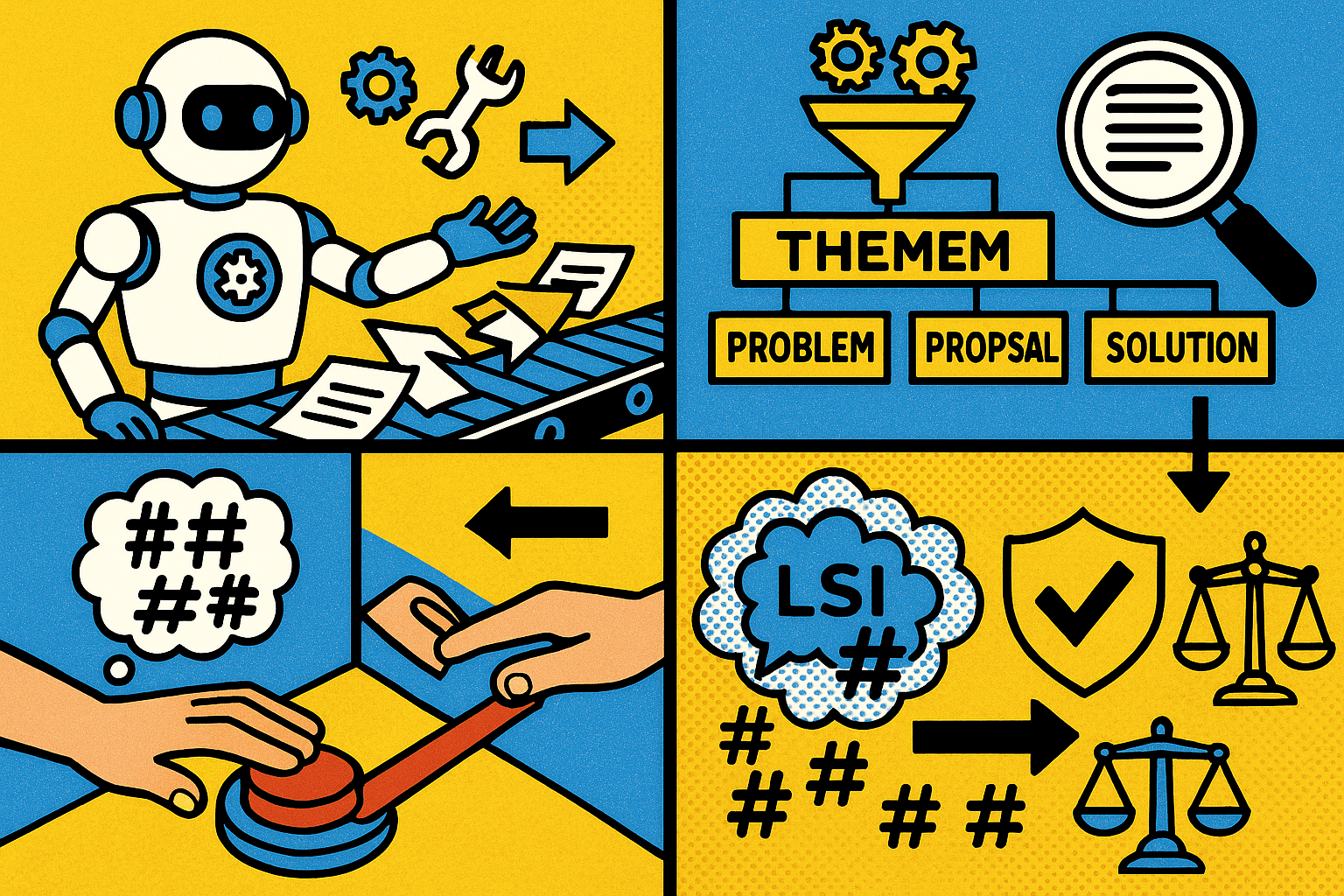
We converted each submission into discrete, reviewable claims (the unit of analysis). Each claim was tagged as:
Problem (what’s failing / what harm occurs)
Proposal (what change is recommended)
Solution (how implementation should happen)
Core fields (simplified):source_id, claim_id, theme, claim_type, tags, quote, source_locator, status_flags
That created a clear audit path: submission → extracted claim → classification decision → report output.
2.2 AI-assisted coding, with real guardrails
AI helped with suggestions at scale (extraction, tagging, draft summaries). It did not publish anything on its own.
Guardrails that mattered:
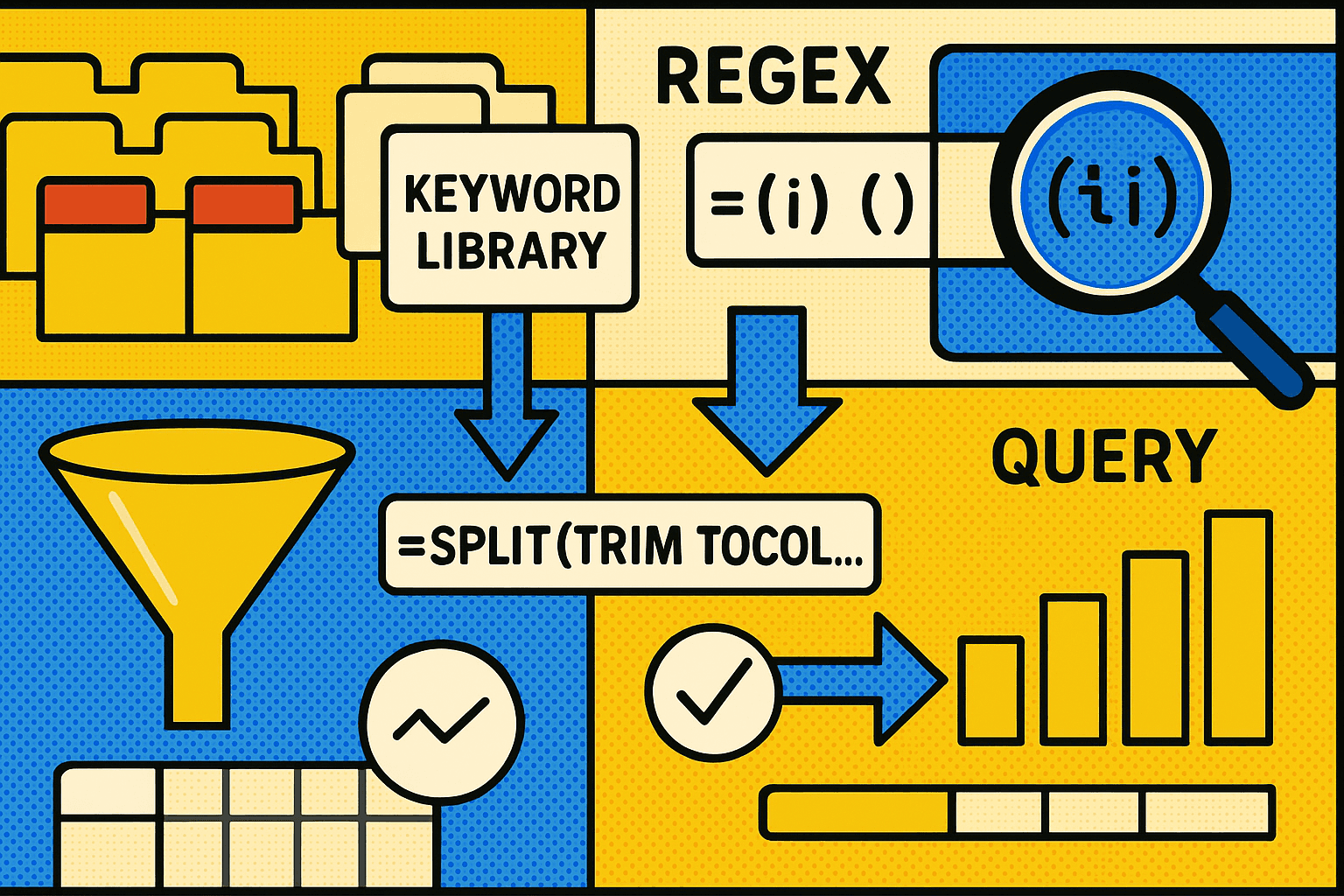
controlled taxonomy + tag libraries (expandable, but changes logged)
mandatory human review before anything was used for reporting
quotes + locators attached to claims so reviewers could verify quickly
regeneration rules when taxonomy changed (so counts and outputs stayed consistent)
2.3 Reporting that was built for drafting and review
Outputs were packaged in consistent formats the team could reuse:
theme-level synthesis tables and ranked issue lists
cross-theme rollups of recurring levers and constraints
draft-ready summaries and “decision prompts” for policy optioning
Specialist review and thematic expert reporting
Once public submissions were synthesised, the work shifted from “what was said” to “what it means—and what’s feasible.”
3) Specialist synthesis pack + structured commentary capture
Specialists reviewed a synthesis pack and commented on:
accuracy of interpretation
missing issues, risks, enabling conditions
feasibility and sequencing
trade-offs and implementation dependencies
Their feedback was captured in a structured, searchable way—so it didn’t disappear into margin notes.
4) Specialist thematic reports
In parallel, domain experts produced thematic reports aligned to the same structure. These added:
operational realism and technical nuance
system constraints and dependencies that public inputs often miss
practical mechanisms and sequencing considerations
Specialist content was treated as evidence too: tagged, linked, and comparable in the same architecture.
enjoying this Free resource?
Get all of my actionable checklists, templates, and case studies.
Triangulation: public signals vs specialist signals
With both streams captured, we compared them to surface what the drafting team actually needed:
Where signals aligned (high confidence)
issues repeatedly raised across both public and specialist inputs
remedies that were both publicly supported and specialist-feasible
cross-cutting levers appearing across multiple themes
Where signals diverged (needs careful framing)
popular public proposals that required enabling reforms or higher-level changes
specialist “system plumbing” issues that were underrepresented in submissions
high-frequency issues that needed translating into implementable policy instruments
Result: the team got more than “what people said.” They got a clear map of where evidence converged, where it didn’t, and what that implied for sequencing and trade-offs.

Insight Copilot: evidence assistant for drafting support
After consolidation, we built an interactive assistant grounded in the curated corpus (submissions, synthesis, specialist reports). It supported the drafting team through March 2026 with:
quick retrieval of supporting excerpts for draft statements
organisation by theme, sub-theme, reform lever, implementation constraint
side-by-side comparisons of public vs specialist perspectives on the same topic
repeatable “recipes” like: “Show top issues + proposed remedies for Theme X, with supporting quotes.”
Important point: it was designed as retrieval + organisation over curated sources, so outputs stayed attributable. It wasn’t a substitute for judgement.

Drafting workflow: keeping claims tied to evidence
To reduce drafting churn, we supported a drafting-time workflow built around:
consistent section structure across themes
synthesis tables + narrative sections mapped to templates
evidence-to-claim linkage (quotes + locators)
human-in-the-loop review cycles (review → revise → verify)
That made it easier to defend statements, respond to comments, and keep drafts aligned to the evidence base.

Governance, QA, and audit trail
This needed to stand up to scrutiny, so governance was part of the system—not an afterthought:
two-stage review (reviewer + theme lead)
logged disagreements and change notes
versioned exports generated from the same dataset
redaction flags and data minimisation for sensitive content
controlled access to working datasets and exports (client environment where possible)

Before vs after
Before
dozens of PDFs/emails in inconsistent formats
slow manual collation and late-stage reconciliation
weak traceability from synthesis statements back to source text
hard to compare themes reliably or regenerate outputs consistently
After
one structured evidence base (claims database)
consistent tagging with documented changes
filterable views by theme/type/tag and review status
quantified signals that could be regenerated as the taxonomy improved
specialist review and thematic reports integrated into the same architecture
drafting-time retrieval through an interactive evidence assistant
Limitations (plainly stated)
public submissions are self-selected; they aren’t statistically representative
frequency counts reflect what appears often in the dataset, not national prevalence
classification involves interpretation; we controlled this through review + quotes + audit logs
AI can misclassify; it was used for speed and suggestion, not final authority
Lessons you can reuse on other policy/donor work
start with a shared schema and taxonomy before using AI at scale
credibility comes from review + traceability, not shiny summaries
capture specialist feedback in a structured way so it stays usable
triangulation (public vs specialist) is where synthesis becomes decision-ready
build drafting-time retrieval early—this is where teams save real time
How this maps to my service offerings
If your team is drowning in documents, reviews, and late-stage reconciliation, this is the system pattern I build:
Capture & Automation Engine: structured intake, routing, status tracking, audit trail
Evidence, Insight & Reporting Engine: claims database, coding workflow + QA, traceable synthesis, standards-aligned outputs
Insight Copilot: evidence assistant over your curated corpus, with guardrails and repeatable queries
Report Writer System: drafting workflow with evidence-to-claim linkage and review loops
If you want a similar setup for a policy process, research programme, MEL work, or donor reporting workflow, book a 20-minute scoping call. We’ll nail down objectives, standards, constraints, stakeholders, and the fastest “capture → analyse → report” build that fits your environment.
Frequently Asked Questions
1) How did you ensure POPIA/PAIA compliance while using AI?
Data minimisation, redaction gates before publishing, and a register of lawful bases for processing. We followed the Information Regulator’s PAIA guide and POPIA guidance notes.
2) What counts did you publish?
Per theme: most-cited problems; top proposals/solutions; and cross-theme roll-ups—grounded in the 265-submission dataset documented in the integrated analysis.
3) How do AI outputs get verified?
Every auto-tag is reviewed by a theme lead; disagreements are logged; prompts evolve. This mirrors OECD advice on accountable AI in the public sector.
4) Which global frameworks guided the digital workflow design?
World Bank GovTech materials (shared platforms, service digitisation) and OECD public-sector AI guidance.
Turning messy submissions into a traceable evidence base (and a drafting assistant)
Between August 2025 and March 2026, I helped the LGWP26 team turn a high-volume pile of qualitative inputs into something the team could actually use under pressure:
a clean, traceable evidence base
a repeatable specialist review + reporting pipeline
and a searchable evidence assistant to support drafting through to finalisation
This wasn’t “run AI, get a summary.” The value came from the plumbing: structured capture, a consistent taxonomy, review loops, clear audit trails, and outputs you could regenerate as the evidence base evolved.
What we produced (at a glance)
Inputs
270 submissions received
265 included in the cleaned dataset (after dedupe / scope / quality checks)
specialist comments on the synthesis pack
specialist thematic reports (written by domain experts)
Outputs
a clean claims database with a documented taxonomy and traceability back to source text
a 100-page integrated synthesis for specialist review and policy optioning
11 thematic reports (plus cross-cutting synthesis) packaged for review and drafting
a triangulation layer comparing public vs specialist signals (alignments + gaps)
an interactive evidence assistant grounded in the curated corpus to support retrieval and structured drafting support
a handover-ready package: SOPs, data dictionary, QA approach, workflow map
The problem
The White Paper team needed a coherent, defensible view of what people submitted—fast. And then they needed to bring specialist review and thematic expertise into the same picture without losing traceability.
The constraints were familiar policy-grade ones:
submissions arrive as PDFs, emails, scans, letters… all different formats
manual collation is slow, inconsistent, and hard to audit
late-stage “reconciliation” creates rework and dents confidence
specialists don’t want raw folders—they want structured packs and clear prompts
drafters need fast retrieval of evidence without rereading everything
The approach
I used the same building blocks I use in other evidence-heavy policy and donor contexts: capture → structure → review → publish → retrieve.
1) Data capture & workflow controls
Even without a public intake form, the core job was the same: turn messy documents into structured records with clear control points.
What we set up:
repeatable intake from mixed sources
standard file naming + metadata capture + dedupe controls
status tracking across Ingest → Tag → Review → Publish
flags for needs_review, escalate_to_reference_group, confidential_redaction, out_of_scope
Result: the evidence base became consistent, trackable, and owned—no more “mystery folders.”
2) Evidence, insight & reporting engine
2.1 Turning submissions into a claims database
We converted each submission into discrete, reviewable claims (the unit of analysis). Each claim was tagged as:
Problem (what’s failing / what harm occurs)
Proposal (what change is recommended)
Solution (how implementation should happen)
Core fields (simplified):source_id, claim_id, theme, claim_type, tags, quote, source_locator, status_flags
That created a clear audit path: submission → extracted claim → classification decision → report output.
2.2 AI-assisted coding, with real guardrails
AI helped with suggestions at scale (extraction, tagging, draft summaries). It did not publish anything on its own.
Guardrails that mattered:
controlled taxonomy + tag libraries (expandable, but changes logged)
mandatory human review before anything was used for reporting
quotes + locators attached to claims so reviewers could verify quickly
regeneration rules when taxonomy changed (so counts and outputs stayed consistent)
2.3 Reporting that was built for drafting and review
Outputs were packaged in consistent formats the team could reuse:
theme-level synthesis tables and ranked issue lists
cross-theme rollups of recurring levers and constraints
draft-ready summaries and “decision prompts” for policy optioning
Specialist review and thematic expert reporting
Once public submissions were synthesised, the work shifted from “what was said” to “what it means—and what’s feasible.”
3) Specialist synthesis pack + structured commentary capture
Specialists reviewed a synthesis pack and commented on:
accuracy of interpretation
missing issues, risks, enabling conditions
feasibility and sequencing
trade-offs and implementation dependencies
Their feedback was captured in a structured, searchable way—so it didn’t disappear into margin notes.
4) Specialist thematic reports
In parallel, domain experts produced thematic reports aligned to the same structure. These added:
operational realism and technical nuance
system constraints and dependencies that public inputs often miss
practical mechanisms and sequencing considerations
Specialist content was treated as evidence too: tagged, linked, and comparable in the same architecture.
enjoying this Free resource?
Get all of my actionable checklists, templates, and case studies.
Triangulation: public signals vs specialist signals
With both streams captured, we compared them to surface what the drafting team actually needed:
Where signals aligned (high confidence)
issues repeatedly raised across both public and specialist inputs
remedies that were both publicly supported and specialist-feasible
cross-cutting levers appearing across multiple themes
Where signals diverged (needs careful framing)
popular public proposals that required enabling reforms or higher-level changes
specialist “system plumbing” issues that were underrepresented in submissions
high-frequency issues that needed translating into implementable policy instruments
Result: the team got more than “what people said.” They got a clear map of where evidence converged, where it didn’t, and what that implied for sequencing and trade-offs.
Insight Copilot: evidence assistant for drafting support
After consolidation, we built an interactive assistant grounded in the curated corpus (submissions, synthesis, specialist reports). It supported the drafting team through March 2026 with:
quick retrieval of supporting excerpts for draft statements
organisation by theme, sub-theme, reform lever, implementation constraint
side-by-side comparisons of public vs specialist perspectives on the same topic
repeatable “recipes” like: “Show top issues + proposed remedies for Theme X, with supporting quotes.”
Important point: it was designed as retrieval + organisation over curated sources, so outputs stayed attributable. It wasn’t a substitute for judgement.
Drafting workflow: keeping claims tied to evidence
To reduce drafting churn, we supported a drafting-time workflow built around:
consistent section structure across themes
synthesis tables + narrative sections mapped to templates
evidence-to-claim linkage (quotes + locators)
human-in-the-loop review cycles (review → revise → verify)
That made it easier to defend statements, respond to comments, and keep drafts aligned to the evidence base.
Governance, QA, and audit trail
This needed to stand up to scrutiny, so governance was part of the system—not an afterthought:
two-stage review (reviewer + theme lead)
logged disagreements and change notes
versioned exports generated from the same dataset
redaction flags and data minimisation for sensitive content
controlled access to working datasets and exports (client environment where possible)
Before vs after
Before
dozens of PDFs/emails in inconsistent formats
slow manual collation and late-stage reconciliation
weak traceability from synthesis statements back to source text
hard to compare themes reliably or regenerate outputs consistently
After
one structured evidence base (claims database)
consistent tagging with documented changes
filterable views by theme/type/tag and review status
quantified signals that could be regenerated as the taxonomy improved
specialist review and thematic reports integrated into the same architecture
drafting-time retrieval through an interactive evidence assistant
Limitations (plainly stated)
public submissions are self-selected; they aren’t statistically representative
frequency counts reflect what appears often in the dataset, not national prevalence
classification involves interpretation; we controlled this through review + quotes + audit logs
AI can misclassify; it was used for speed and suggestion, not final authority
Lessons you can reuse on other policy/donor work
start with a shared schema and taxonomy before using AI at scale
credibility comes from review + traceability, not shiny summaries
capture specialist feedback in a structured way so it stays usable
triangulation (public vs specialist) is where synthesis becomes decision-ready
build drafting-time retrieval early—this is where teams save real time
How this maps to my service offerings
If your team is drowning in documents, reviews, and late-stage reconciliation, this is the system pattern I build:
Capture & Automation Engine: structured intake, routing, status tracking, audit trail
Evidence, Insight & Reporting Engine: claims database, coding workflow + QA, traceable synthesis, standards-aligned outputs
Insight Copilot: evidence assistant over your curated corpus, with guardrails and repeatable queries
Report Writer System: drafting workflow with evidence-to-claim linkage and review loops
If you want a similar setup for a policy process, research programme, MEL work, or donor reporting workflow, book a 20-minute scoping call. We’ll nail down objectives, standards, constraints, stakeholders, and the fastest “capture → analyse → report” build that fits your environment.
Frequently Asked Questions
1) How did you ensure POPIA/PAIA compliance while using AI?
Data minimisation, redaction gates before publishing, and a register of lawful bases for processing. We followed the Information Regulator’s PAIA guide and POPIA guidance notes.
2) What counts did you publish?
Per theme: most-cited problems; top proposals/solutions; and cross-theme roll-ups—grounded in the 265-submission dataset documented in the integrated analysis.
3) How do AI outputs get verified?
Every auto-tag is reviewed by a theme lead; disagreements are logged; prompts evolve. This mirrors OECD advice on accountable AI in the public sector.
4) Which global frameworks guided the digital workflow design?
World Bank GovTech materials (shared platforms, service digitisation) and OECD public-sector AI guidance.
Turning messy submissions into a traceable evidence base (and a drafting assistant)
Between August 2025 and March 2026, I helped the LGWP26 team turn a high-volume pile of qualitative inputs into something the team could actually use under pressure:
a clean, traceable evidence base
a repeatable specialist review + reporting pipeline
and a searchable evidence assistant to support drafting through to finalisation
This wasn’t “run AI, get a summary.” The value came from the plumbing: structured capture, a consistent taxonomy, review loops, clear audit trails, and outputs you could regenerate as the evidence base evolved.
What we produced (at a glance)
Inputs
270 submissions received
265 included in the cleaned dataset (after dedupe / scope / quality checks)
specialist comments on the synthesis pack
specialist thematic reports (written by domain experts)
Outputs
a clean claims database with a documented taxonomy and traceability back to source text
a 100-page integrated synthesis for specialist review and policy optioning
11 thematic reports (plus cross-cutting synthesis) packaged for review and drafting
a triangulation layer comparing public vs specialist signals (alignments + gaps)
an interactive evidence assistant grounded in the curated corpus to support retrieval and structured drafting support
a handover-ready package: SOPs, data dictionary, QA approach, workflow map
The problem
The White Paper team needed a coherent, defensible view of what people submitted—fast. And then they needed to bring specialist review and thematic expertise into the same picture without losing traceability.
The constraints were familiar policy-grade ones:
submissions arrive as PDFs, emails, scans, letters… all different formats
manual collation is slow, inconsistent, and hard to audit
late-stage “reconciliation” creates rework and dents confidence
specialists don’t want raw folders—they want structured packs and clear prompts
drafters need fast retrieval of evidence without rereading everything
The approach
I used the same building blocks I use in other evidence-heavy policy and donor contexts: capture → structure → review → publish → retrieve.
1) Data capture & workflow controls
Even without a public intake form, the core job was the same: turn messy documents into structured records with clear control points.
What we set up:
repeatable intake from mixed sources
standard file naming + metadata capture + dedupe controls
status tracking across Ingest → Tag → Review → Publish
flags for needs_review, escalate_to_reference_group, confidential_redaction, out_of_scope
Result: the evidence base became consistent, trackable, and owned—no more “mystery folders.”
2) Evidence, insight & reporting engine
2.1 Turning submissions into a claims database
We converted each submission into discrete, reviewable claims (the unit of analysis). Each claim was tagged as:
Problem (what’s failing / what harm occurs)
Proposal (what change is recommended)
Solution (how implementation should happen)
Core fields (simplified):source_id, claim_id, theme, claim_type, tags, quote, source_locator, status_flags
That created a clear audit path: submission → extracted claim → classification decision → report output.
2.2 AI-assisted coding, with real guardrails
AI helped with suggestions at scale (extraction, tagging, draft summaries). It did not publish anything on its own.
Guardrails that mattered:
controlled taxonomy + tag libraries (expandable, but changes logged)
mandatory human review before anything was used for reporting
quotes + locators attached to claims so reviewers could verify quickly
regeneration rules when taxonomy changed (so counts and outputs stayed consistent)
2.3 Reporting that was built for drafting and review
Outputs were packaged in consistent formats the team could reuse:
theme-level synthesis tables and ranked issue lists
cross-theme rollups of recurring levers and constraints
draft-ready summaries and “decision prompts” for policy optioning
Specialist review and thematic expert reporting
Once public submissions were synthesised, the work shifted from “what was said” to “what it means—and what’s feasible.”
3) Specialist synthesis pack + structured commentary capture
Specialists reviewed a synthesis pack and commented on:
accuracy of interpretation
missing issues, risks, enabling conditions
feasibility and sequencing
trade-offs and implementation dependencies
Their feedback was captured in a structured, searchable way—so it didn’t disappear into margin notes.
4) Specialist thematic reports
In parallel, domain experts produced thematic reports aligned to the same structure. These added:
operational realism and technical nuance
system constraints and dependencies that public inputs often miss
practical mechanisms and sequencing considerations
Specialist content was treated as evidence too: tagged, linked, and comparable in the same architecture.
enjoying this Free resource?
Get all of my actionable checklists, templates, and case studies.
Triangulation: public signals vs specialist signals
With both streams captured, we compared them to surface what the drafting team actually needed:
Where signals aligned (high confidence)
issues repeatedly raised across both public and specialist inputs
remedies that were both publicly supported and specialist-feasible
cross-cutting levers appearing across multiple themes
Where signals diverged (needs careful framing)
popular public proposals that required enabling reforms or higher-level changes
specialist “system plumbing” issues that were underrepresented in submissions
high-frequency issues that needed translating into implementable policy instruments
Result: the team got more than “what people said.” They got a clear map of where evidence converged, where it didn’t, and what that implied for sequencing and trade-offs.
Insight Copilot: evidence assistant for drafting support
After consolidation, we built an interactive assistant grounded in the curated corpus (submissions, synthesis, specialist reports). It supported the drafting team through March 2026 with:
quick retrieval of supporting excerpts for draft statements
organisation by theme, sub-theme, reform lever, implementation constraint
side-by-side comparisons of public vs specialist perspectives on the same topic
repeatable “recipes” like: “Show top issues + proposed remedies for Theme X, with supporting quotes.”
Important point: it was designed as retrieval + organisation over curated sources, so outputs stayed attributable. It wasn’t a substitute for judgement.
Drafting workflow: keeping claims tied to evidence
To reduce drafting churn, we supported a drafting-time workflow built around:
consistent section structure across themes
synthesis tables + narrative sections mapped to templates
evidence-to-claim linkage (quotes + locators)
human-in-the-loop review cycles (review → revise → verify)
That made it easier to defend statements, respond to comments, and keep drafts aligned to the evidence base.
Governance, QA, and audit trail
This needed to stand up to scrutiny, so governance was part of the system—not an afterthought:
two-stage review (reviewer + theme lead)
logged disagreements and change notes
versioned exports generated from the same dataset
redaction flags and data minimisation for sensitive content
controlled access to working datasets and exports (client environment where possible)
Before vs after
Before
dozens of PDFs/emails in inconsistent formats
slow manual collation and late-stage reconciliation
weak traceability from synthesis statements back to source text
hard to compare themes reliably or regenerate outputs consistently
After
one structured evidence base (claims database)
consistent tagging with documented changes
filterable views by theme/type/tag and review status
quantified signals that could be regenerated as the taxonomy improved
specialist review and thematic reports integrated into the same architecture
drafting-time retrieval through an interactive evidence assistant
Limitations (plainly stated)
public submissions are self-selected; they aren’t statistically representative
frequency counts reflect what appears often in the dataset, not national prevalence
classification involves interpretation; we controlled this through review + quotes + audit logs
AI can misclassify; it was used for speed and suggestion, not final authority
Lessons you can reuse on other policy/donor work
start with a shared schema and taxonomy before using AI at scale
credibility comes from review + traceability, not shiny summaries
capture specialist feedback in a structured way so it stays usable
triangulation (public vs specialist) is where synthesis becomes decision-ready
build drafting-time retrieval early—this is where teams save real time
How this maps to my service offerings
If your team is drowning in documents, reviews, and late-stage reconciliation, this is the system pattern I build:
Capture & Automation Engine: structured intake, routing, status tracking, audit trail
Evidence, Insight & Reporting Engine: claims database, coding workflow + QA, traceable synthesis, standards-aligned outputs
Insight Copilot: evidence assistant over your curated corpus, with guardrails and repeatable queries
Report Writer System: drafting workflow with evidence-to-claim linkage and review loops
If you want a similar setup for a policy process, research programme, MEL work, or donor reporting workflow, book a 20-minute scoping call. We’ll nail down objectives, standards, constraints, stakeholders, and the fastest “capture → analyse → report” build that fits your environment.
Frequently Asked Questions
1) How did you ensure POPIA/PAIA compliance while using AI?
Data minimisation, redaction gates before publishing, and a register of lawful bases for processing. We followed the Information Regulator’s PAIA guide and POPIA guidance notes.
2) What counts did you publish?
Per theme: most-cited problems; top proposals/solutions; and cross-theme roll-ups—grounded in the 265-submission dataset documented in the integrated analysis.
3) How do AI outputs get verified?
Every auto-tag is reviewed by a theme lead; disagreements are logged; prompts evolve. This mirrors OECD advice on accountable AI in the public sector.
4) Which global frameworks guided the digital workflow design?
World Bank GovTech materials (shared platforms, service digitisation) and OECD public-sector AI guidance.
How to support these free resources
Everything here is free to use. Your support helps me create more SA-ready templates and guides.
Everything here is free to use. Your support helps me create more SA-ready templates and guides.
Everything here is free to use. Your support helps me create more SA-ready templates and guides.
Sponsor the blog: buymeacoffee.com/romanosboraine
Share a link to a resource with a colleague or community group
Credit or link back to the post if you use a template in your own materials
Sponsor the blog: buymeacoffee.com/romanosboraine
Share a link to a resource with a colleague or community group
Credit or link back to the post if you use a template in your own materials
Sponsor the blog: buymeacoffee.com/romanosboraine
Share a link to a resource with a colleague or community group
Credit or link back to the post if you use a template in your own materials
Explore Similar resources to this WPLG Case Study

TheFutureMe (TFM), a systems-first wellness score for real life

LGWP26 Case Study: Turning 270 Submissions into a Traceable Evidence Base
08 Sept 2025

UNICEF AI Case Study: Child Poverty Study (Zambia)
08 Sept 2025

Crafting a Digital Brand: A Case Study on the Launch of Craft Cask
20 Jun 2025
Explore Similar resources to this WPLG Case Study
TheFutureMe (TFM), a systems-first wellness score for real life
LGWP26 Case Study: Turning 270 Submissions into a Traceable Evidence Base
08 Sept 2025
UNICEF AI Case Study: Child Poverty Study (Zambia)
08 Sept 2025
Crafting a Digital Brand: A Case Study on the Launch of Craft Cask
20 Jun 2025
Explore Similar resources to this WPLG Case Study
TheFutureMe (TFM), a systems-first wellness score for real life
LGWP26 Case Study: Turning 270 Submissions into a Traceable Evidence Base
08 Sept 2025
UNICEF AI Case Study: Child Poverty Study (Zambia)
08 Sept 2025
Crafting a Digital Brand: A Case Study on the Launch of Craft Cask
20 Jun 2025
Kickstart a project today!
Kickstart a project today!

Book a 20-minute scoping call with Romanos
Book a 20-minute scoping call to map your reporting requirements, data reality, and delivery risks. You’ll leave with a recommended scope (Capture Engine, Evidence & Reporting Engine, or full system) and next steps.
Helping agencies, consultancies, and delivery teams turn raw inputs into structured evidence and reporting-ready outputs.
Book a 20-minute scoping call with Romanos
Book a 20-minute scoping call to map your reporting requirements, data reality, and delivery risks. You’ll leave with a recommended scope (Capture Engine, Evidence & Reporting Engine, or full system) and next steps.
Helping agencies, consultancies, and delivery teams turn raw inputs into structured evidence and reporting-ready outputs.
Book a 20-minute scoping call with Romanos
Book a 20-minute scoping call to map your reporting requirements, data reality, and delivery risks. You’ll leave with a recommended scope (Capture Engine, Evidence & Reporting Engine, or full system) and next steps.
Helping agencies, consultancies, and delivery teams turn raw inputs into structured evidence and reporting-ready outputs.