UNICEF AI Case Study: Child Poverty Study (Zambia)
UNICEF AI Case Study: Child Poverty Study (Zambia)
UNICEF AI Case Study: Child Poverty Study (Zambia)
Get Free Templates & Resources
Evidence, Insight and Reporting Engine + Insight Copilot
Project snapshot
The problem
The team had 120 narrative case studies with a multi-theme research design. But the analysis process was slow, hard to keep consistent across themes, and difficult to defend during review because evidence links weren’t always clear.
The goal
Build a governed, spreadsheet-first evidence workflow that:
increases throughput
enforces thematic consistency
produces fast, traceable reporting outputs (tables, summaries, draft-ready sections)
Scope and timeline
Dataset: 120 qualitative case studies on female-headed households (FHHs)
Locations: Mongu (Western) and Kasama (Northern)
Engagement length: three months
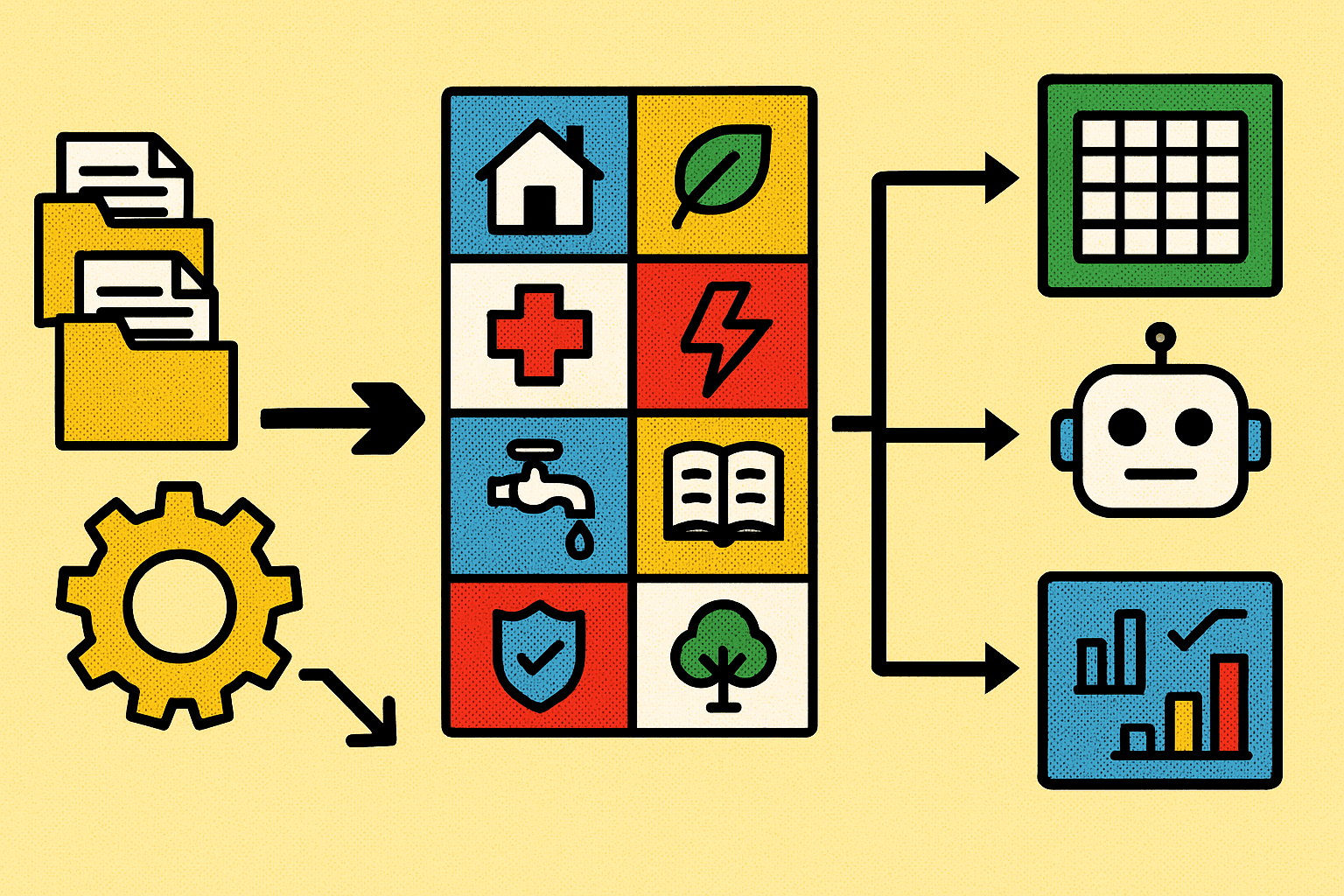
What the system delivered
Clean, standardised evidence base in Excel and Google Sheets, backed by a clear data dictionary
AI-assisted qualitative coding and synthesis, with review guardrails and a quote-per-claim requirement
Self-serve insight interface (Custom GPT) for plain-English querying and reuse
Standards-aligned outputs (tables, summaries, draft-ready sections) mapped to the team’s reporting format
Governance built in: QA checks, versioning approach, and traceability back to case ID, quote, and cell range
Handover pack: simple SOP + training so non-technical writers could run the workflow
Access control + confidentiality approach, prioritising work inside the client environment where possible

Why female-headed households
Female-headed households in rural Zambia often face layered vulnerabilities: unstable income, care burdens, and reduced access to key services. The team already had rich narrative material. The bottleneck was turning it into consistent, query-ready evidence that could be used confidently in reporting—without losing the thread back to the original story.

Objectives
Speed: reduce processing time per case from 60–90 minutes to under 20 minutes
Standardisation: ensure every case maps to the same schema across the full thematic scope
Self-serve reporting: let report writers pull numbers and narratives without relying on analysts for every question
Auditability: ensure every reported value can be traced back to the source excerpt and its location in the database

System design and workflow
This was built as a schema-first evidence workflow, designed for transparency and adoption. The team already worked in spreadsheets, so we kept the workflow where people were comfortable—and added the structure, QA, and traceability that were missing.
Step 1: Define the schema and data dictionary
A ten-theme schema structured extraction and synthesis across the study. Each theme included defined fields (typically 8–15 per theme), with:
consistent naming
allowed formats
guidance for missing values and edge cases
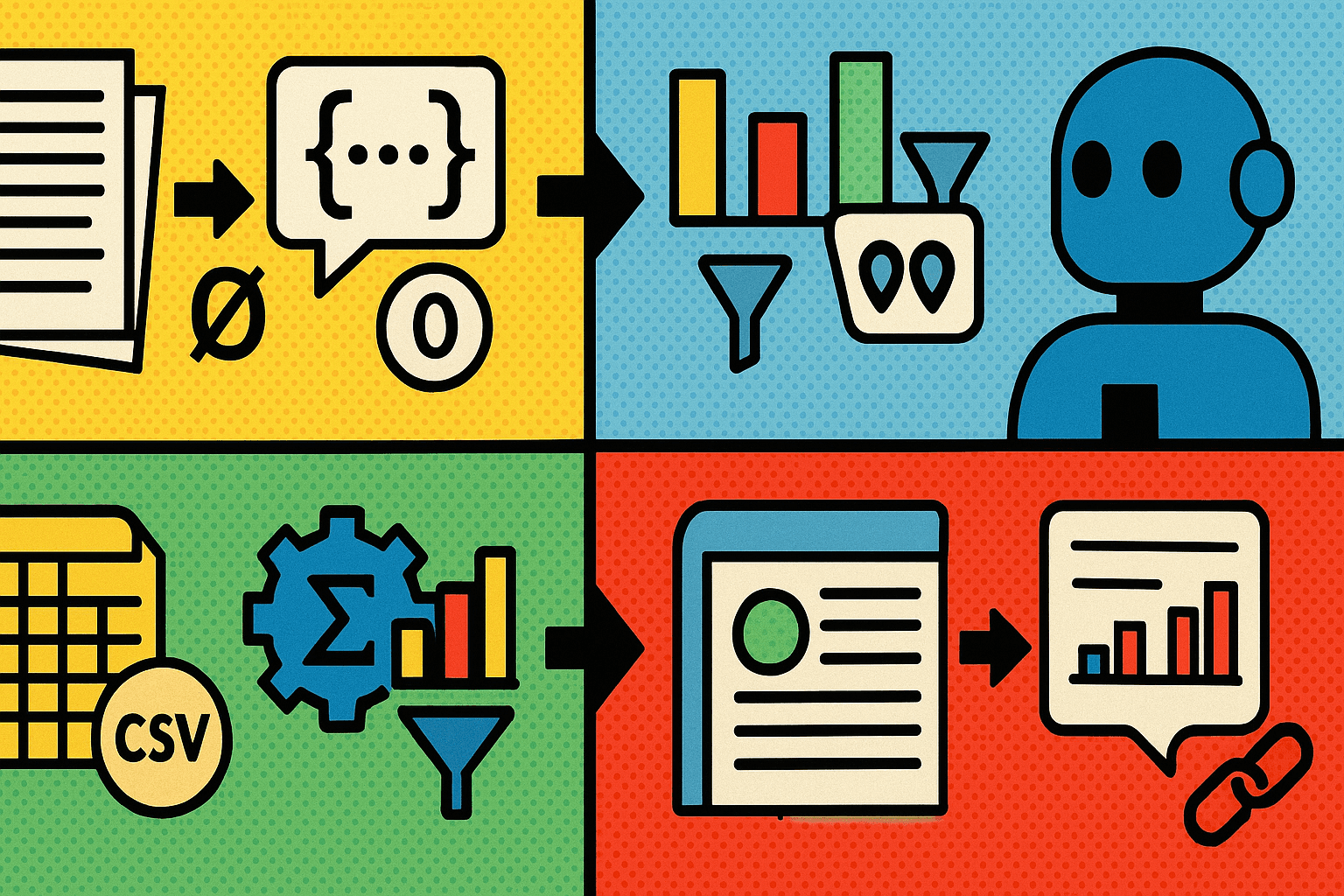
Step 2: AI-assisted case coding with guardrails
A dedicated workflow processed one case at a time and returned structured outputs aligned to the schema. Guardrails were explicit:
extract only what’s supported by the text
include a supporting quote for each non-null value
use null when information is missing
flag ambiguity for human review
That’s how speed improved without trading away defensibility.
Step 3: Build the evidence base in spreadsheets
Structured outputs were flattened and loaded into Excel and Google Sheets to create a clean, query-ready database. This made review easier (and faster), because stakeholders could see exactly what was stored and how it connected back to the original case narrative.
Step 4: Compute and pattern detection with spreadsheet logic
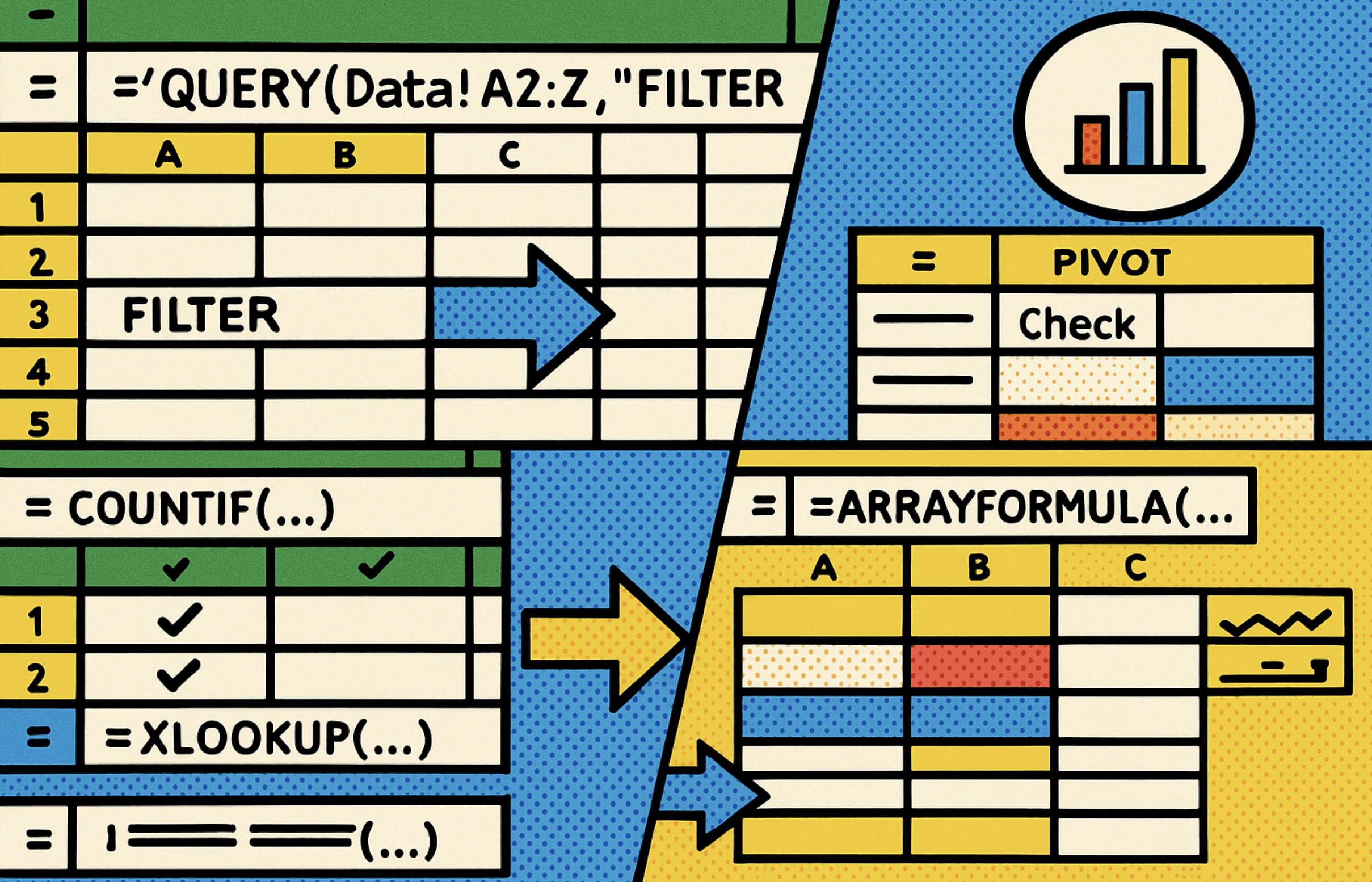
A lightweight formula library supported rapid analysis, including:
frequency-ranked lists (e.g., top expenses)
comparisons across locations (Kasama vs Mongu)
conditional filters (e.g., households with specific constraints)
rollups from row-level child/household fields into reporting tables
Step 5: Self-serve insight interface (Custom GPT)
A reporting-focused GPT sat on top of the evidence base so writers could ask questions in plain English and receive:
a short narrative summary
a table output
the formulas or ranges used (so results could be checked and reused directly)
This closed the gap between evidence storage and report writing—without analysts becoming a constant bottleneck.
enjoying this Free resource?
Get all of my actionable checklists, templates, and case studies.
Governance and quality control
Governance wasn’t a final step. It was designed into the workflow from day one:
Outlier flags: unusual values and missing fields surfaced for review
Schema checks: cases validated against expected structure before database entry
Reconciliation checks: location splits tested against totals
Quote requirement: every non-null entry needed a supporting excerpt
Traceability: reporting outputs could be backtracked to case ID → excerpt → exact cell range

Results
Time saved and throughput
Manual baseline: 60–90 minutes per case
Steady-state workflow: ~15 minutes per case (about four cases per hour)
Estimated time saved: ~120 analyst hours across the dataset
More consistent insights
The schema and coding rules reduced interpretation drift and improved comparability across themes and locations.
Faster reporting
Non-technical writers could generate reporting-ready tables and summaries on demand—then verify using the provided formulas and ranges.
Audit-ready evidence
Claims could be traced back to the source material quickly, which improved confidence during drafting and review cycles.
Training and handover
Two compact training sessions enabled the team to run the system independently:
Reading the data: schema orientation, interpreting nulls, completeness checks
Using the insight interface: “Ask, check, paste” + how to verify formulas + how to embed traceable tables into drafts
A simple SOP reinforced consistent use and reduced reliance on specialist support.

Limitations and next steps
Dashboards: add lightweight dashboards for faster visual scanning
Language support: introduce local-language prompt variants where relevant
Delta reporting: track dataset changes over time with a change log
Confidence indicators: surface coder confidence and ambiguity flags more clearly in outputs

Takeaways for other teams
Start schema-first. It’s the backbone of traceability and reporting consistency.
Use AI for repetitive work, but keep governance and human review in the loop.
Work in tools teams already use, then add structure, QA, and auditability.
Demand both the answer and the method, so outputs stay defensible.
Want a similar system for your project?
If your team is working with narrative interviews, case studies, consultations, or open-ended survey data—and you need defensible reporting outputs on a deadline—I can help.
You’ll get a customised system that fits your environment, reporting standard, and delivery timeline.
Frequently Asked Questions
1) Can this approach be adapted to other qualitative projects?
Yes. The workflow is schema-first and data-agnostic, so it adapts well to interviews, focus groups, open-ended survey responses, field notes, and consultation submissions.
2) Does this require programming or Python?
No. This project was intentionally spreadsheet-first so non-technical teams could operate it. If needed, the same system design can integrate other tools, but spreadsheets remain a strong option for transparency and adoption.
3) How do you reduce AI hallucination risk?
Guardrails are built in: supporting quotes for extracted values, nulls for missing information, and ambiguity flagged for human review. Outputs remain traceable back to the source.
4) Can this scale beyond 120 cases?
Yes. The pipeline scales well. The main constraint is how much QA you choose to apply for edge cases. For larger datasets, we typically add sampling rules and stricter validation layers.
Evidence, Insight and Reporting Engine + Insight Copilot
Project snapshot
The problem
The team had 120 narrative case studies with a multi-theme research design. But the analysis process was slow, hard to keep consistent across themes, and difficult to defend during review because evidence links weren’t always clear.
The goal
Build a governed, spreadsheet-first evidence workflow that:
increases throughput
enforces thematic consistency
produces fast, traceable reporting outputs (tables, summaries, draft-ready sections)
Scope and timeline
Dataset: 120 qualitative case studies on female-headed households (FHHs)
Locations: Mongu (Western) and Kasama (Northern)
Engagement length: three months
What the system delivered
Clean, standardised evidence base in Excel and Google Sheets, backed by a clear data dictionary
AI-assisted qualitative coding and synthesis, with review guardrails and a quote-per-claim requirement
Self-serve insight interface (Custom GPT) for plain-English querying and reuse
Standards-aligned outputs (tables, summaries, draft-ready sections) mapped to the team’s reporting format
Governance built in: QA checks, versioning approach, and traceability back to case ID, quote, and cell range
Handover pack: simple SOP + training so non-technical writers could run the workflow
Access control + confidentiality approach, prioritising work inside the client environment where possible
Why female-headed households
Female-headed households in rural Zambia often face layered vulnerabilities: unstable income, care burdens, and reduced access to key services. The team already had rich narrative material. The bottleneck was turning it into consistent, query-ready evidence that could be used confidently in reporting—without losing the thread back to the original story.
Objectives
Speed: reduce processing time per case from 60–90 minutes to under 20 minutes
Standardisation: ensure every case maps to the same schema across the full thematic scope
Self-serve reporting: let report writers pull numbers and narratives without relying on analysts for every question
Auditability: ensure every reported value can be traced back to the source excerpt and its location in the database
System design and workflow
This was built as a schema-first evidence workflow, designed for transparency and adoption. The team already worked in spreadsheets, so we kept the workflow where people were comfortable—and added the structure, QA, and traceability that were missing.
Step 1: Define the schema and data dictionary
A ten-theme schema structured extraction and synthesis across the study. Each theme included defined fields (typically 8–15 per theme), with:
consistent naming
allowed formats
guidance for missing values and edge cases
Step 2: AI-assisted case coding with guardrails
A dedicated workflow processed one case at a time and returned structured outputs aligned to the schema. Guardrails were explicit:
extract only what’s supported by the text
include a supporting quote for each non-null value
use null when information is missing
flag ambiguity for human review
That’s how speed improved without trading away defensibility.
Step 3: Build the evidence base in spreadsheets
Structured outputs were flattened and loaded into Excel and Google Sheets to create a clean, query-ready database. This made review easier (and faster), because stakeholders could see exactly what was stored and how it connected back to the original case narrative.
Step 4: Compute and pattern detection with spreadsheet logic
A lightweight formula library supported rapid analysis, including:
frequency-ranked lists (e.g., top expenses)
comparisons across locations (Kasama vs Mongu)
conditional filters (e.g., households with specific constraints)
rollups from row-level child/household fields into reporting tables
Step 5: Self-serve insight interface (Custom GPT)
A reporting-focused GPT sat on top of the evidence base so writers could ask questions in plain English and receive:
a short narrative summary
a table output
the formulas or ranges used (so results could be checked and reused directly)
This closed the gap between evidence storage and report writing—without analysts becoming a constant bottleneck.
enjoying this Free resource?
Get all of my actionable checklists, templates, and case studies.
Governance and quality control
Governance wasn’t a final step. It was designed into the workflow from day one:
Outlier flags: unusual values and missing fields surfaced for review
Schema checks: cases validated against expected structure before database entry
Reconciliation checks: location splits tested against totals
Quote requirement: every non-null entry needed a supporting excerpt
Traceability: reporting outputs could be backtracked to case ID → excerpt → exact cell range
Results
Time saved and throughput
Manual baseline: 60–90 minutes per case
Steady-state workflow: ~15 minutes per case (about four cases per hour)
Estimated time saved: ~120 analyst hours across the dataset
More consistent insights
The schema and coding rules reduced interpretation drift and improved comparability across themes and locations.
Faster reporting
Non-technical writers could generate reporting-ready tables and summaries on demand—then verify using the provided formulas and ranges.
Audit-ready evidence
Claims could be traced back to the source material quickly, which improved confidence during drafting and review cycles.
Training and handover
Two compact training sessions enabled the team to run the system independently:
Reading the data: schema orientation, interpreting nulls, completeness checks
Using the insight interface: “Ask, check, paste” + how to verify formulas + how to embed traceable tables into drafts
A simple SOP reinforced consistent use and reduced reliance on specialist support.
Limitations and next steps
Dashboards: add lightweight dashboards for faster visual scanning
Language support: introduce local-language prompt variants where relevant
Delta reporting: track dataset changes over time with a change log
Confidence indicators: surface coder confidence and ambiguity flags more clearly in outputs
Takeaways for other teams
Start schema-first. It’s the backbone of traceability and reporting consistency.
Use AI for repetitive work, but keep governance and human review in the loop.
Work in tools teams already use, then add structure, QA, and auditability.
Demand both the answer and the method, so outputs stay defensible.
Want a similar system for your project?
If your team is working with narrative interviews, case studies, consultations, or open-ended survey data—and you need defensible reporting outputs on a deadline—I can help.
You’ll get a customised system that fits your environment, reporting standard, and delivery timeline.
Frequently Asked Questions
1) Can this approach be adapted to other qualitative projects?
Yes. The workflow is schema-first and data-agnostic, so it adapts well to interviews, focus groups, open-ended survey responses, field notes, and consultation submissions.
2) Does this require programming or Python?
No. This project was intentionally spreadsheet-first so non-technical teams could operate it. If needed, the same system design can integrate other tools, but spreadsheets remain a strong option for transparency and adoption.
3) How do you reduce AI hallucination risk?
Guardrails are built in: supporting quotes for extracted values, nulls for missing information, and ambiguity flagged for human review. Outputs remain traceable back to the source.
4) Can this scale beyond 120 cases?
Yes. The pipeline scales well. The main constraint is how much QA you choose to apply for edge cases. For larger datasets, we typically add sampling rules and stricter validation layers.
Evidence, Insight and Reporting Engine + Insight Copilot
Project snapshot
The problem
The team had 120 narrative case studies with a multi-theme research design. But the analysis process was slow, hard to keep consistent across themes, and difficult to defend during review because evidence links weren’t always clear.
The goal
Build a governed, spreadsheet-first evidence workflow that:
increases throughput
enforces thematic consistency
produces fast, traceable reporting outputs (tables, summaries, draft-ready sections)
Scope and timeline
Dataset: 120 qualitative case studies on female-headed households (FHHs)
Locations: Mongu (Western) and Kasama (Northern)
Engagement length: three months
What the system delivered
Clean, standardised evidence base in Excel and Google Sheets, backed by a clear data dictionary
AI-assisted qualitative coding and synthesis, with review guardrails and a quote-per-claim requirement
Self-serve insight interface (Custom GPT) for plain-English querying and reuse
Standards-aligned outputs (tables, summaries, draft-ready sections) mapped to the team’s reporting format
Governance built in: QA checks, versioning approach, and traceability back to case ID, quote, and cell range
Handover pack: simple SOP + training so non-technical writers could run the workflow
Access control + confidentiality approach, prioritising work inside the client environment where possible
Why female-headed households
Female-headed households in rural Zambia often face layered vulnerabilities: unstable income, care burdens, and reduced access to key services. The team already had rich narrative material. The bottleneck was turning it into consistent, query-ready evidence that could be used confidently in reporting—without losing the thread back to the original story.
Objectives
Speed: reduce processing time per case from 60–90 minutes to under 20 minutes
Standardisation: ensure every case maps to the same schema across the full thematic scope
Self-serve reporting: let report writers pull numbers and narratives without relying on analysts for every question
Auditability: ensure every reported value can be traced back to the source excerpt and its location in the database
System design and workflow
This was built as a schema-first evidence workflow, designed for transparency and adoption. The team already worked in spreadsheets, so we kept the workflow where people were comfortable—and added the structure, QA, and traceability that were missing.
Step 1: Define the schema and data dictionary
A ten-theme schema structured extraction and synthesis across the study. Each theme included defined fields (typically 8–15 per theme), with:
consistent naming
allowed formats
guidance for missing values and edge cases
Step 2: AI-assisted case coding with guardrails
A dedicated workflow processed one case at a time and returned structured outputs aligned to the schema. Guardrails were explicit:
extract only what’s supported by the text
include a supporting quote for each non-null value
use null when information is missing
flag ambiguity for human review
That’s how speed improved without trading away defensibility.
Step 3: Build the evidence base in spreadsheets
Structured outputs were flattened and loaded into Excel and Google Sheets to create a clean, query-ready database. This made review easier (and faster), because stakeholders could see exactly what was stored and how it connected back to the original case narrative.
Step 4: Compute and pattern detection with spreadsheet logic
A lightweight formula library supported rapid analysis, including:
frequency-ranked lists (e.g., top expenses)
comparisons across locations (Kasama vs Mongu)
conditional filters (e.g., households with specific constraints)
rollups from row-level child/household fields into reporting tables
Step 5: Self-serve insight interface (Custom GPT)
A reporting-focused GPT sat on top of the evidence base so writers could ask questions in plain English and receive:
a short narrative summary
a table output
the formulas or ranges used (so results could be checked and reused directly)
This closed the gap between evidence storage and report writing—without analysts becoming a constant bottleneck.
enjoying this Free resource?
Get all of my actionable checklists, templates, and case studies.
Governance and quality control
Governance wasn’t a final step. It was designed into the workflow from day one:
Outlier flags: unusual values and missing fields surfaced for review
Schema checks: cases validated against expected structure before database entry
Reconciliation checks: location splits tested against totals
Quote requirement: every non-null entry needed a supporting excerpt
Traceability: reporting outputs could be backtracked to case ID → excerpt → exact cell range
Results
Time saved and throughput
Manual baseline: 60–90 minutes per case
Steady-state workflow: ~15 minutes per case (about four cases per hour)
Estimated time saved: ~120 analyst hours across the dataset
More consistent insights
The schema and coding rules reduced interpretation drift and improved comparability across themes and locations.
Faster reporting
Non-technical writers could generate reporting-ready tables and summaries on demand—then verify using the provided formulas and ranges.
Audit-ready evidence
Claims could be traced back to the source material quickly, which improved confidence during drafting and review cycles.
Training and handover
Two compact training sessions enabled the team to run the system independently:
Reading the data: schema orientation, interpreting nulls, completeness checks
Using the insight interface: “Ask, check, paste” + how to verify formulas + how to embed traceable tables into drafts
A simple SOP reinforced consistent use and reduced reliance on specialist support.
Limitations and next steps
Dashboards: add lightweight dashboards for faster visual scanning
Language support: introduce local-language prompt variants where relevant
Delta reporting: track dataset changes over time with a change log
Confidence indicators: surface coder confidence and ambiguity flags more clearly in outputs
Takeaways for other teams
Start schema-first. It’s the backbone of traceability and reporting consistency.
Use AI for repetitive work, but keep governance and human review in the loop.
Work in tools teams already use, then add structure, QA, and auditability.
Demand both the answer and the method, so outputs stay defensible.
Want a similar system for your project?
If your team is working with narrative interviews, case studies, consultations, or open-ended survey data—and you need defensible reporting outputs on a deadline—I can help.
You’ll get a customised system that fits your environment, reporting standard, and delivery timeline.
Frequently Asked Questions
1) Can this approach be adapted to other qualitative projects?
Yes. The workflow is schema-first and data-agnostic, so it adapts well to interviews, focus groups, open-ended survey responses, field notes, and consultation submissions.
2) Does this require programming or Python?
No. This project was intentionally spreadsheet-first so non-technical teams could operate it. If needed, the same system design can integrate other tools, but spreadsheets remain a strong option for transparency and adoption.
3) How do you reduce AI hallucination risk?
Guardrails are built in: supporting quotes for extracted values, nulls for missing information, and ambiguity flagged for human review. Outputs remain traceable back to the source.
4) Can this scale beyond 120 cases?
Yes. The pipeline scales well. The main constraint is how much QA you choose to apply for edge cases. For larger datasets, we typically add sampling rules and stricter validation layers.
How to support these free resources
Everything here is free to use. Your support helps me create more SA-ready templates and guides.
Everything here is free to use. Your support helps me create more SA-ready templates and guides.
Everything here is free to use. Your support helps me create more SA-ready templates and guides.
Sponsor the blog: buymeacoffee.com/romanosboraine
Share a link to a resource with a colleague or community group
Credit or link back to the post if you use a template in your own materials
Sponsor the blog: buymeacoffee.com/romanosboraine
Share a link to a resource with a colleague or community group
Credit or link back to the post if you use a template in your own materials
Sponsor the blog: buymeacoffee.com/romanosboraine
Share a link to a resource with a colleague or community group
Credit or link back to the post if you use a template in your own materials
Explore Similar resources to this UNICEF AI Case Study

TheFutureMe (TFM), a systems-first wellness score for real life

LGWP26 Case Study: Turning 270 Submissions into a Traceable Evidence Base
08 Sept 2025

UNICEF AI Case Study: Child Poverty Study (Zambia)
08 Sept 2025

Crafting a Digital Brand: A Case Study on the Launch of Craft Cask
20 Jun 2025
Explore Similar resources to this UNICEF AI Case Study
TheFutureMe (TFM), a systems-first wellness score for real life
LGWP26 Case Study: Turning 270 Submissions into a Traceable Evidence Base
08 Sept 2025
UNICEF AI Case Study: Child Poverty Study (Zambia)
08 Sept 2025
Crafting a Digital Brand: A Case Study on the Launch of Craft Cask
20 Jun 2025
Explore Similar resources to this UNICEF AI Case Study
TheFutureMe (TFM), a systems-first wellness score for real life
LGWP26 Case Study: Turning 270 Submissions into a Traceable Evidence Base
08 Sept 2025
UNICEF AI Case Study: Child Poverty Study (Zambia)
08 Sept 2025
Crafting a Digital Brand: A Case Study on the Launch of Craft Cask
20 Jun 2025
Kickstart a project today!
Kickstart a project today!

Book a 20-minute scoping call with Romanos
Book a 20-minute scoping call to map your reporting requirements, data reality, and delivery risks. You’ll leave with a recommended scope (Capture Engine, Evidence & Reporting Engine, or full system) and next steps.
Helping agencies, consultancies, and delivery teams turn raw inputs into structured evidence and reporting-ready outputs.
Book a 20-minute scoping call with Romanos
Book a 20-minute scoping call to map your reporting requirements, data reality, and delivery risks. You’ll leave with a recommended scope (Capture Engine, Evidence & Reporting Engine, or full system) and next steps.
Helping agencies, consultancies, and delivery teams turn raw inputs into structured evidence and reporting-ready outputs.
Book a 20-minute scoping call with Romanos
Book a 20-minute scoping call to map your reporting requirements, data reality, and delivery risks. You’ll leave with a recommended scope (Capture Engine, Evidence & Reporting Engine, or full system) and next steps.
Helping agencies, consultancies, and delivery teams turn raw inputs into structured evidence and reporting-ready outputs.